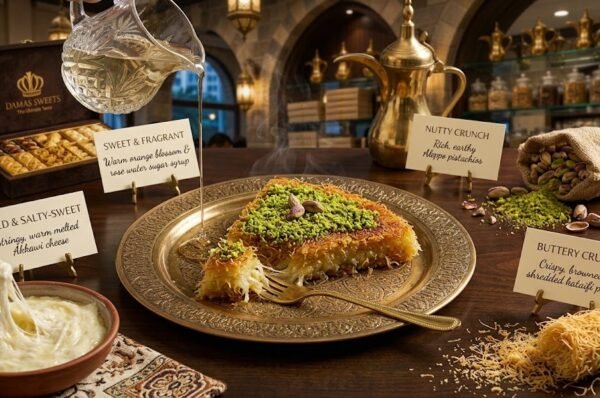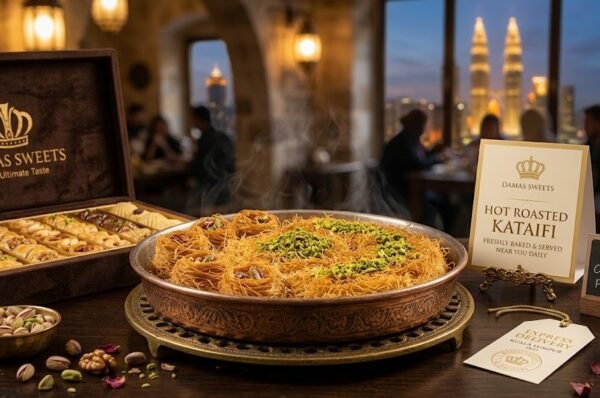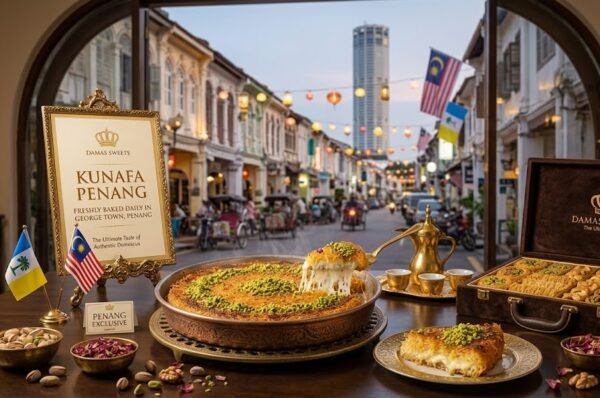
The Molten Heart of Levantine Pastry 🌟
Understanding the authentic types of cheese used in kunafa has become a vital subject for dessert lovers, luxury hosts, and culinary connoisseurs across Kuala Lumpur in 2026.
When you cut through that audibly crackling, golden Kataifi crust, the true soul of the dessert reveals itself in the molten stretch of the cheese beneath. However, as Middle Eastern gastronomy expands globally, an alarming number of commercial bakeries take massive shortcuts. Inexperienced cafes often substitute traditional cheeses with industrial pizza cheeses, leaving diners with an oily, rubbery imitation.
To truly appreciate this imperial Levantine masterpiece, one must understand the traditional types of cheese used in kunafa and how each variety performs under high baking heat. Authentic Levantine pastry chefs do not select cheese merely for a temporary visual stretch; they choose cheeses that provide a delicate savory balance, silky elasticity, and clean dairy aroma without leaving a greasy film on the palate.
Exploring the historical types of cheese used in kunafa reveals centuries of artisan cheese-making traditions spanning Syria, Palestine, and premium Southeast Asian dairy heritage.
Discover genuine, mastercrafted hot cheese trays made with 100% pure animal-clarified ghee at the Damas Sweets Menu today.
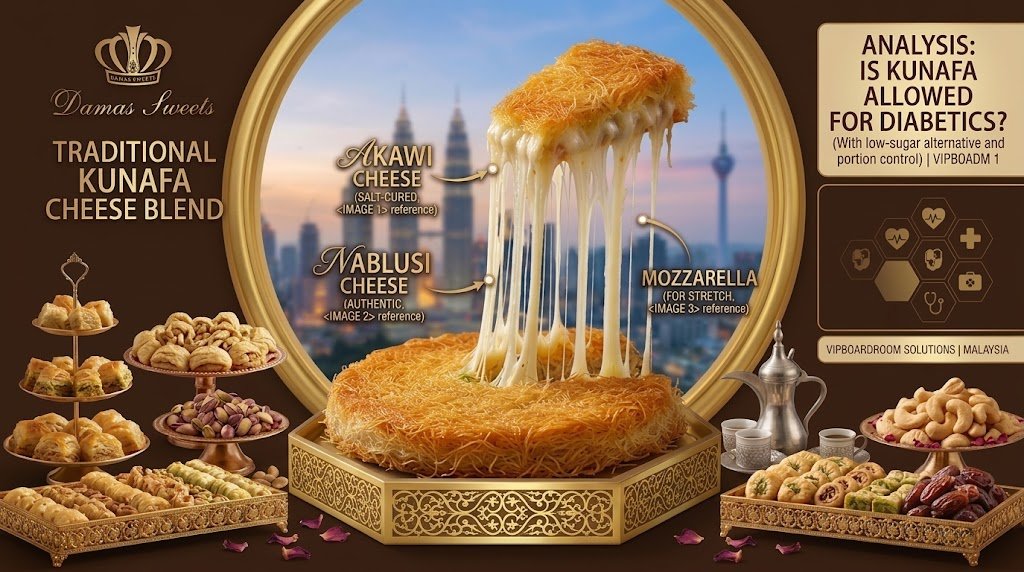
1. Indonesian Akkawi Cheese: The Sovereign Standard at Damas Sweets 🧀
Among all historical types of cheese used in kunafa, Akkawi cheese (Jibneh Akkawi) stands as the undisputed sovereign.
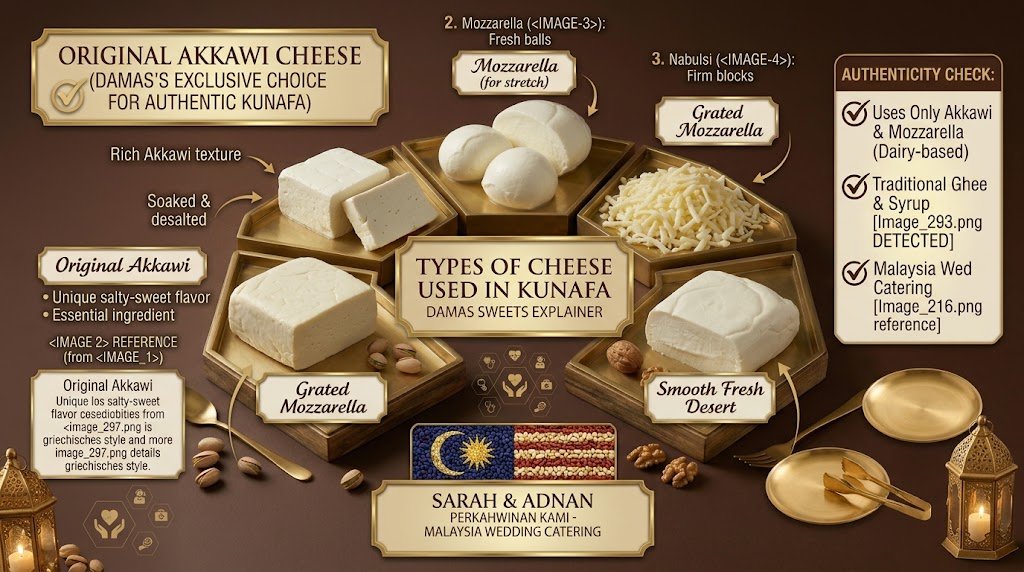
Originally hailing from the historic coastal Levant, authentic Akkawi is a soft, unripened white brine cheese traditionally crafted from pure cow’s milk. What elevates Akkawi above other types of cheese used in kunafa is its unique texture: smooth, elastic, and mildly salted.
While commercial bakeries settle for low-cost local fillers, Damas Sweets crafts every single hot pan using 100% authentic Indonesian Akkawi cheese. This premium, ethical dairy curd delivers an extraordinary cloud-like elasticity and an unmatched, delicate savory profile.
Before baking, our artisan Syrian pastry chefs soak the authentic Indonesian Akkawi cheese in fresh water over several hours, carefully desalinating it until only a gentle, pleasant whisper of savory richness remains. When baked under golden Kataifi pastry basted in pure animal-clarified ghee, it transforms into an ultra-silky, stretching mantle that never turns rubbery as it rests.
Learn everything about this iconic dessert in our comprehensive Kunafa Malaysia Guide.
2. Nabulsi Cheese: The Ancient Aromatic Treasure 🌿
When researching historical types of cheese used in kunafa, Nabulsi cheese (Jibneh Nabulsiyeh) represents the ancient, spiced tradition of Palestine.
Originating in Nablus—the historic cradle of fine semolina kunafa—this semi-hard white cheese is crafted from sheep’s or goat’s milk and preserved in heavy brine. Unlike modern mild cheeses, traditional Nabulsi is boiled with crushed mastic (mustaka) and mahlab seeds, infusing the curd with an intoxicating, herbal-floral fragrance.
Among the various types of cheese used in kunafa, Nabulsi offers the firmest, most toothsome bite. Because it is naturally dense and salty, it requires extensive desalinating and is often blended with softer curds like Akkawi to achieve the ideal balance between aromatic depth and molten stretch.
While less common in Southeast Asia due to limited importation, true pastry historians recognize Nabulsi as one of the most culturally significant types of cheese used in kunafa ever created.
3. Majdoul & Halloumi: Why Grilling Cheeses Fail in Pastry 🚨
To fully understand the types of cheese used in kunafa, one must also understand which cheeses fail inside a pastry oven.
Novice home cooks and budget caterers sometimes attempt to use shredded Halloumi or braided Majdoul cheese. While both are celebrated Mediterranean cheeses, they belong to an entirely different culinary category:
Halloumi: Formulated with a very high melting point specifically for grilling and pan-frying. When baked inside kunafa, Halloumi squeaks against the teeth and refuses to stretch into that signature silky ribbon.
Majdoul: Dense, salty, and stringy, Majdoul loses its delicate fibers when heated in heavy sugar syrup, turning into tough, chewy knots.
Analyzing these unsuitable varieties proves why the classic types of cheese used in kunafa must be unripened, soft-curd cheeses engineered for smooth, uninterrupted thermal melting.
4. The Mozzarella Shortcut: Why 80% of Bakeries Cheat 🚨
The most widespread scandal in the modern dessert market revolves around the replacement of authentic types of cheese used in kunafa with cheap commercial mozzarella.
To cut ingredient costs, commercial bakeries and trendy cafes aggressively substitute authentic Akkawi with low-grade pizza mozzarella or processed industrial cheese blends. While commercial mozzarella produces an immediate, high-contrast stretch for social media videos, it fails completely on every culinary metric:
Rubbery Texture Upon Cooling: Mozzarella relies on heavy casein protein cross-linking. Within five minutes of leaving the oven, it solidifies into a tough, chewy block.
Oily Separation: Industrial mozzarella releases heavy, yellow grease when heated, soaking the bottom crust and destroying the pastry’s crispness.
Bland, Flat Flavor: Mozzarella lacks the subtle, fermented tang that makes authentic types of cheese used in kunafa harmonize so beautifully with sweet floral rosewater syrups.
At Damas Sweets, we strictly condemn this commercial shortcut. We never use mozzarella in our kitchen. Connoisseurs who evaluate types of cheese used in kunafa immediately recognize that commercial mozzarella undermines centuries of Levantine culinary craft.
5. Comprehensive Comparison Matrix: Cheeses Evaluated 📊
To clearly assess the primary types of cheese used in kunafa, review this direct technical performance breakdown:
| Cheese Variety | Milk Source | Melt & Stretch Profile | Flavor Balance with Syrup | Authenticity Rating |
| Authentic Indonesian Akkawi | Fresh Pure Cow’s Milk | Silky, smooth, extended cloud-like pull | Mildly savory, perfect floral balance | ⭐⭐⭐⭐⭐ (The Gold Standard) |
| Traditional Nabulsi | Sheep / Goat Milk | Dense, chewy, moderate stretch | Herbal, mastic-infused, aromatic | ⭐⭐⭐⭐⭐ (Historic Heritage) |
| Syrian Jibneh Baladi | Fresh Cow’s Milk | Soft, velvety, delicate elasticity | Clean, fresh dairy creaminess | ⭐⭐⭐⭐ (Regional Classic) |
| Commercial Mozzarella | Industrial Cow’s Milk | Rubbery, snaps quickly, separates oils | Bland, greasy, heavy aftertaste | ❌ (Commercial Cheat – Never Used) |
| Cypriot Halloumi | Sheep / Goat Milk | High melting point, zero stretch | Overly salty, squeaky texture | ❌ (Unsuitable for Pastry) |
Evaluating these types of cheese used in kunafa demonstrates why artisan kitchens strictly adhere to desalinated soft-curd cheeses like authentic Indonesian Akkawi.
6. The Desalination Ritual: How Master Chefs Prepare the Curd 🌊
Achieving perfection with traditional types of cheese used in kunafa requires an exacting, labor-intensive desalination process (Tahliah).
Because authentic Akkawi and Nabulsi cheeses are cured in brine for preservation, they cannot be placed directly into sweet pastry. Master Syrian chefs follow a precise artisanal protocol:
Precision Slicing: The cheese blocks are cut into uniform, paper-thin ribbons to maximize surface area.
Cold Water Soaking: The ribbons are submerged in ice-cold, purified water, which is drained and replenished every forty-five minutes over a six-to-eight-hour period.
The Salinity Test: The chef tastes the curd at regular intervals. The goal is not complete neutrality; a microscopic trace of mineral salt must remain to balance the cane sugar syrup.
Gentle Pressing: The desalinated curd is pressed under clean cotton cloths to extract residual moisture before baking, ensuring the dough stays crisp.
This ancient craftsmanship separates genuine masters of the types of cheese used in kunafa from casual commercial bakers.
7. Curating a Royal Dessert Banquet with Complementary Pastries 🛒
While experiencing the finest types of cheese used in kunafa serves as the centerpiece of your gathering, pairing hot cheese with dry Damascus pastries creates a complete culinary journey:
Classic Aleppo Pistachio Diamonds: Over forty hand-rolled layers of gossamer phyllo dough packed with double-roasted green pistachios. Explore our Baklava department.
Cashew Bird’s Nests (Osh El Bulbul): Delicate spun Kataifi nests filled with whole roasted cashews, offering an airy crunch. Browse our Assorted Premium Baklava collection.
Grounded Walnut Diamonds: Deep, earthy roasted walnuts that provide a balanced, less sweet profile alongside hot cheese.
Pistachio Mabroumeh Cylinders: Firm, tightly wound cylinders delivering an audible, crumble-free crunch.
Baklava Cream (Warbat): Velvety milk curd (Ashta) encased in crisp pastry envelopes, providing a cooling dairy contrast to hot cheese. Review our cream selections via Baklava Cream.
Artisanal Gelatin-Free Lokum: Scented rosewater Turkish Delight cubes that gently cleanse the palate. Select luxury gift packaging via Gifts Box.
Why Damas Sweets is the Undisputed Authority on Types of Cheese Used in Kunafa 🏆

When luxury event planners, corporate executives, and Middle Eastern diplomats in Kuala Lumpur discuss the authentic types of cheese used in kunafa, Damas Sweets represents the definitive standard of excellence. Mastery over the types of cheese used in kunafa is not something that can be replicated through automated factory lines; it requires deep cultural knowledge and an uncompromising commitment to pure ingredients.
Many local bakeries claim to understand the types of cheese used in kunafa, yet they cut corners by using commercial mozzarella and synthetic vegetable margarines. These shortcuts compromise the integrity of the pastry. In sharp contrast, Damas Sweets has built an unrivaled reputation by using exclusively 100% authentic Indonesian Akkawi cheese, prepared with vegetarian microbial rennet and desalinated fresh daily. We categorically refuse to use commercial pizza cheeses or mozzarella.
Our corporate and private clients recognize that our mastery over the types of cheese used in kunafa guarantees a dining experience that is both authentic and dignified. Baked in pure animal-clarified ghee (samna baladi), our cheese trays deliver an effortless, silky stretch that stays tender and flavorful throughout your meal.
Choosing Damas Sweets ensures that you never have to settle for rubbery pizza cheese or greasy imitations. When you serve our pastries, you are presenting the absolute gold standard of traditional types of cheese used in kunafa, backed by certified 100% Halal purity and royal Syrian heritage.
Discover our authentic hot pans in the official Kunafa Pastry department.
8. In-House Heated Transit Across Kuala Lumpur & Selangor 🚚
Preserving the delicate texture of authentic types of cheese used in kunafa during transport requires specialized logistics.
Damas Sweets operates a dedicated, temperature-controlled in-house transit fleet across Kuala Lumpur and Selangor, avoiding freelance motorcycle apps that expose hot trays to cold air and sudden jolts.
Our drivers transport each copper pan in custom thermal encasements, ensuring that your cheese arrives piping hot, flawlessly elastic, and ready for immediate service.
Conclusion: Savor the Truth of Pure Levantine Dairy 🏆
Understanding the authentic types of cheese used in kunafa elevates your appreciation for one of the world’s greatest dessert traditions.
Do not settle for commercial bakeries that mask cheap mozzarella behind heavy corn syrups. Demand the genuine elegance of fresh, desalinated Indonesian Akkawi cheese basted in pure animal-clarified ghee and scented with steam-distilled floral waters.
Our Syrian master artisans in Kuala Lumpur are ready to prepare your hot banquet pans with uncompromising precision. Experience the authentic soul of Levant pastry with Damas Sweets today.
Order Your Fresh Hot Cheese Pan Today 🛒
Are you ready to experience the most magnificent cheese pull in the capital, crafted with authentic Indonesian Akkawi curd?
Damas Sweets bakes limited daily batches to guarantee peak freshness, flawless crunch, and complete ingredient transparency.
Browse our complete luxury menu and schedule your delivery online through the Damas Sweets Menu portal.
To select our signature hot cheese trays for your upcoming celebration, visit our dedicated Kunafa Pastry department and confirm your order today! ✨
Frequently Asked Questions (FAQ) 💬
What are the authentic types of cheese used in kunafa?
The most authentic types of cheese used in kunafa are traditional Levantine soft-curd cheeses, primarily Akkawi cheese (Jibneh Akkawi) and Nabulsi cheese (Jibneh Nabulsiyeh). At Damas Sweets, we exclusively use 100% authentic Indonesian Akkawi cheese, renowned for its clean dairy aroma, balanced savory profile, and extraordinary silky stretch.
Why does Damas Sweets refuse to use mozzarella cheese in kunafa?
While commercial cafes use mozzarella as a cheap shortcut, it is completely foreign to traditional types of cheese used in kunafa. Mozzarella releases heavy yellow oil when heated, turns rubbery within minutes of cooling, and lacks the delicate savory-mineral balance needed to complement sweet floral rosewater syrup. Damas Sweets never uses mozzarella.
Is the cheese in authentic kunafa salty?
Authentic Akkawi cheese is cured in brine for preservation, but master pastry chefs desalinate the cheese by soaking it in fresh water over several hours before baking. This leaves only a gentle whisper of savory richness that perfectly balances the sweet floral blossom syrup.
Can authentic cheese kunafa be reheated without losing its stretch?
Yes! To preserve the elasticity of authentic types of cheese used in kunafa, reheat the pastry in a conventional oven at 180°C (350°F) for 8 to 10 minutes, or warm it crust-side down in a covered cast-iron skillet on low heat. Never use a microwave, which turns the cheese rubbery and makes the crust soggy!