The Critical Question of Tropical Dessert Storage 🌟
Understanding how long can kunafa stay outside has become one of the most vital culinary and food safety questions for dessert lovers, banquet hosts, and corporate event planners across Kuala Lumpur and Selangor in 2026.
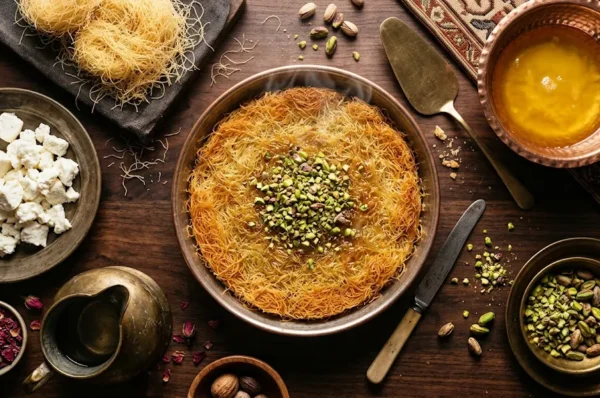
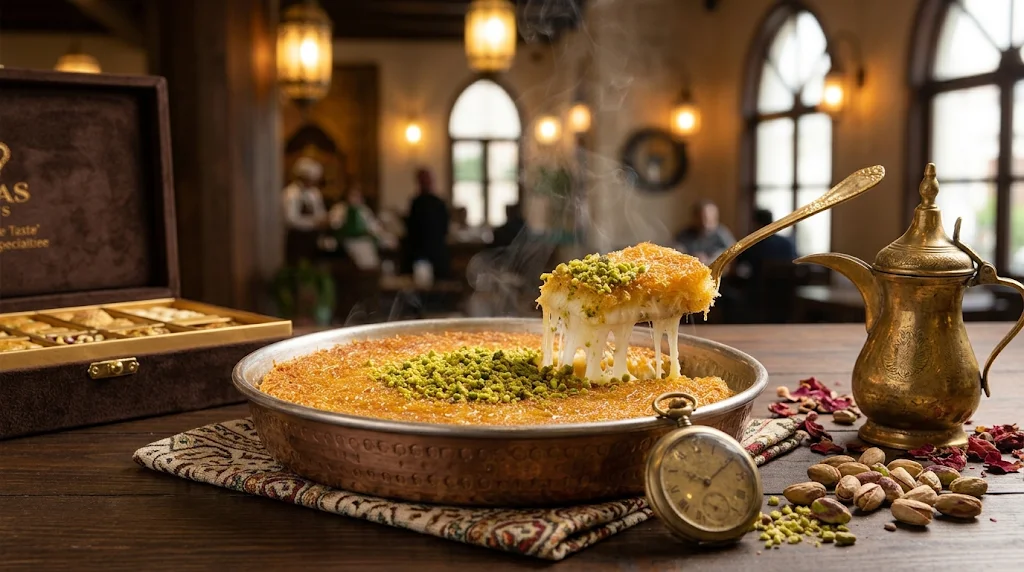
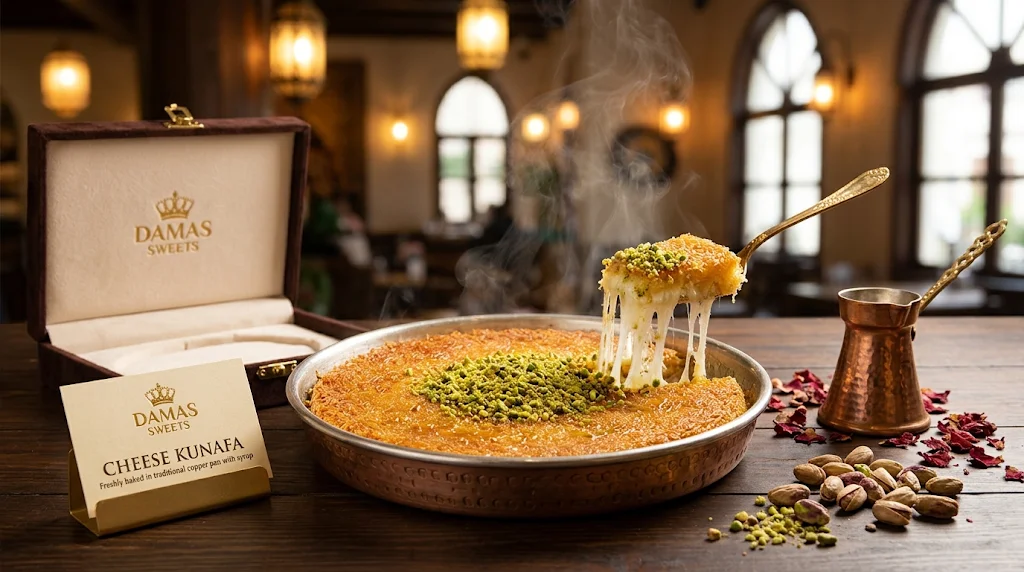
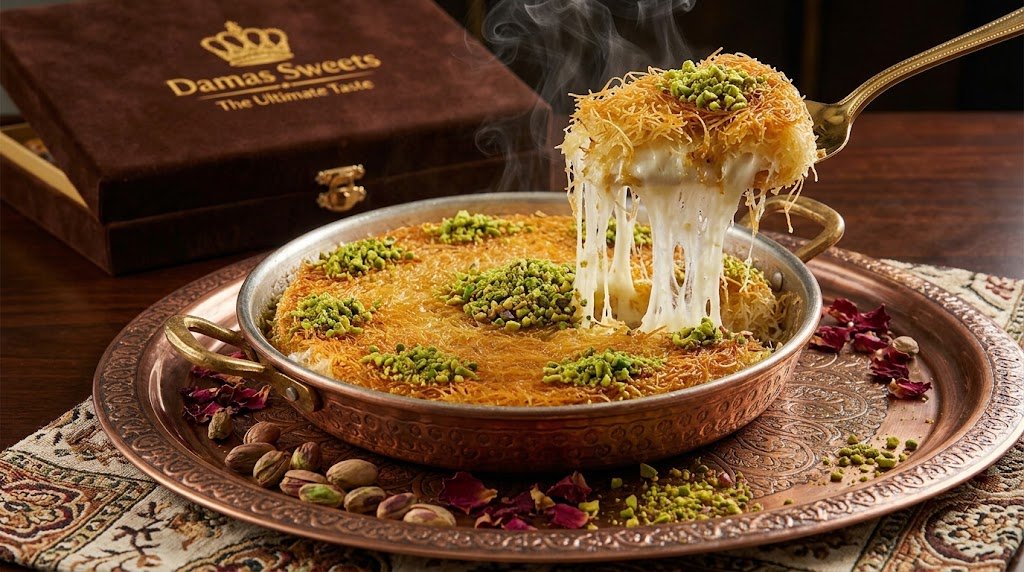
There is nothing quite as magnificent as receiving a freshly baked, sizzling copper pan of authentic Middle Eastern kunafa: golden filaments of Kataifi pastry dough roasted in pure animal-clarified ghee (samna baladi), an elastic layer of molten white cheese, and a fragrant bath of floral sugar syrup. However, because authentic Levantine kunafa is made with real dairy and natural cane sugar without artificial chemical preservatives, managing its shelf life in Southeast Asia’s hot, humid climate requires clear scientific precision.
Whether you have leftover slices from a family dinner in Bangsar, an evening buffet setup in Mont Kiara, or a corporate boardroom spread at Tun Razak Exchange (TRX), asking how long can kunafa stay outside prevents two disastrous outcomes: bacterial dairy spoilage on one hand, and soggy, ruined pastry texture on the other.
In this comprehensive guide, master chefs from Damas Sweets break down the exact hourly shelf-life limits for different kunafa varieties, the thermodynamic impact of Malaysia’s ambient humidity, and proven protocols to keep your pastry fresh, safe, and delicious.
To explore our fresh daily-baked selections with express 2-hour delivery across the Klang Valley, visit the official Damas Sweets Menu today.
1. The Definitive Answer: How Long Can Kunafa Stay Outside by Temperature & Type? ⏱️
When evaluating how long can kunafa stay outside, the duration depends heavily on whether your pastry is kept in an air-conditioned indoor environment versus exposed outdoor tropical heat, as well as the specific filling used:
| Kunafa Variety & Filling | Air-Conditioned Room (20°C–24°C) | Ambient Tropical Heat (28°C–34°C) | Refrigerator Life (2°C–4°C) | Freezer Storage (-18°C) |
| Authentic Akkawi Cheese Kunafa | Up to 12 to 14 Hours (Max Safe Limit) | 4 to 6 Hours Maximum | 3 to 4 Days | Up to 2 Months |
| Fresh Clotted Cream Kunafa (Ashta) | 6 to 8 Hours Maximum | 2 to 3 Hours Maximum | 48 to 72 Hours | Not Recommended |
| Dry Walnut or Nut Kunafa | Up to 48 Hours | 12 to 18 Hours | 7 to 10 Days | Up to 3 Months |
| Commercial Mozzarella Kunafa | 6 to 8 Hours (Turns rubbery) | 2 to 4 Hours (Oil separation) | 2 Days (Hardens) | 1 Month |
Why Temperature Dictates the Clock:
The “Danger Zone” (5°C to 60°C): Food safety science establishes that dairy products left within this temperature window become breeding grounds for bacteria such as Staphylococcus aureus and Bacillus cereus.
The AC Buffer: If your kunafa is kept in an air-conditioned dining room at 22°C, bacterial proliferation is significantly retarded compared to an open-air garden party in Shah Alam where afternoon ambient temperatures reach 33°C with 85% relative humidity.
This clear breakdown answers the immediate concern of how long can kunafa stay outside, ensuring your guests enjoy a safe and exquisite dining experience.
Discover our authentic copper pan selections in the official Kunafa Pastry department.
2. Cheese vs. Cream: The Microbiology Behind Dairy Spoilage in Kunafa 🧀
To understand how long can kunafa stay outside on a biological level, one must examine the fundamental difference between genuine cheese kunafa and clotted cream (Ashta) kunafa:
1. 100% Authentic Indonesian Akkawi Cheese (Higher Stability)
At Damas Sweets, our traditional kunafa is handcrafted using 100% authentic Indonesian Akkawi cheese (never cheap commercial mozzarella). Akkawi is a semi-hard, curd-based brined cheese. Although our chefs desalinate the cheese in cold filtered water for hours to remove excess salt, the dense protein matrix and minimal residual whey give Akkawi cheese a significantly lower water activity (aw) than fresh milk or cream.
Consequently, when people ask how long can kunafa stay outside, Akkawi cheese kunafa safely withstands up to 12 to 14 hours in a cool air-conditioned room (20°C–24°C) because its cured structure resists bacterial fermentation much longer than raw dairy.
2. Fresh Clotted Cream Kunafa (Ashta) (High Spoilage Risk)
In contrast, fresh Ashta is a delicate, slow-simmered dairy curd with a high moisture content and near-neutral pH. It contains zero curing or culturing agents.
Therefore, when asking how long can kunafa stay outside, fresh cream kunafa must be treated like fresh dairy custard: it should never remain at ambient room temperature for more than 6 to 8 hours indoors, and no more than 2 to 3 hours outdoors.
Explore our fresh clotted cream specialties in the Baklava Cream department.
3. The Protective Role of Cane Sugar Syrup (Ater) & Pure Ghee 🍯
An intriguing food science question related to how long can kunafa stay outside is why authentic Levantine kunafa survives longer at room temperature than Western cheesecakes or cream pies.
The secret lies in the ancient Levantine combination of pure animal-clarified ghee and high-density sugar syrup:
1. High Osmotic Pressure (Sugar as a Natural Preservative)
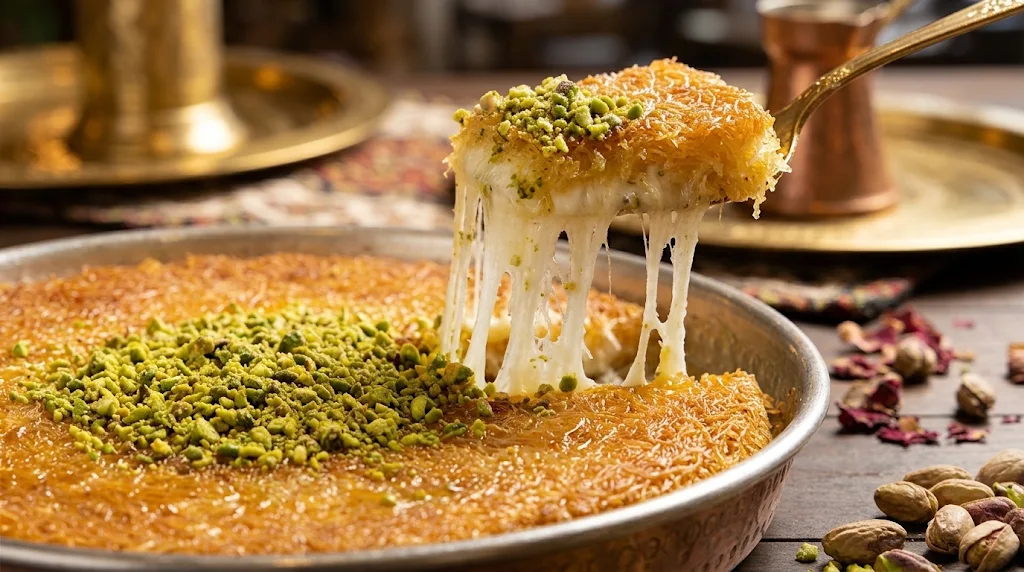
Traditional floral sugar syrup (Ater) is a concentrated solution of sucrose. When poured over kunafa, the high sugar concentration exerts osmotic pressure on microorganisms, drawing water out of bacterial cells through dehydration and inhibiting microbial replication. This natural sugar barrier significantly extends the window of how long can kunafa stay outside safely.
2. The Lipid Moisture Barrier of Pure Animal Ghee (Samna Baladi)
Damas Sweets roasts its Kataifi dough exclusively in 100% pure grass-fed animal-clarified ghee. Pure ghee has 100% of its moisture and milk solids removed during clarification. When baked, the pure butterfat coats the exterior wheat strands in a hydrophobic (water-repelling) lipid film. This protective envelope prevents ambient tropical humidity from instantly dissolving the crispy pastry.
Learn more about these royal Levantine ingredients and preparation techniques in our comprehensive Kunafa Malaysia Guide.
4. 5 Signs That Leftover Kunafa Left Outside Has Gone Bad 🚨
When you are unsure how long can kunafa stay outside or suspect a tray was left out overnight, look for these five clear signs of spoilage before consuming:
Sour or Tangy Dairy Odor: Fresh Akkawi cheese and pure ghee possess a sweet, milky, and nutty caramel aroma. If the kunafa emits a sharp, sour, fermented, or yeast-like smell, the dairy has begun bacterial acidification.
Surface Slime or Stickiness on the Cheese: Inspect the white cheese layer. If it appears cloudy, slimy, or develops a sticky liquid film separate from the syrup, discard it immediately.
Discoloration of the Cheese Core: Genuine Akkawi cheese retains an ivory-white hue. Yellowish spotting, greyish tints, or pinkish micro-patches indicate microbial colonization.
Fizzy or Fermented Taste: If taking a micro-taste produces a tingling, fizzy, or acidic sensation on the tip of the tongue, the sugar syrup has begun wild yeast fermentation.
Rancid Fat Aroma: If synthetic palm margarine was used instead of pure ghee, heat exposure causes the oils to oxidize rapidly, producing an unpleasant stale paint odor.
If any of these signs appear, do not attempt to reheat the pastry. Heating spoiled kunafa may kill live bacteria, but it will not eliminate heat-stable bacterial toxins.
5. Professional Storage Protocols: How to Keep Leftover Kunafa Fresh 📦
Once you know how long can kunafa stay outside, following proper short-term and long-term storage protocols guarantees that you can enjoy every slice over several days:
Phase 1: Short-Term (Same Day / Up to 12 Hours)
Leave in an Air-Conditioned Room (20°C–24°C): If you plan to finish the tray later in the evening, keep the kunafa inside its original heavy pan, loosely tented with aluminum foil or parchment paper. Do not seal it in an airtight plastic container while warm, as trapped steam will make the crispy Kataifi crust soggy.
Phase 2: Medium-Term (Day 2 to Day 4 – Refrigeration)
Allow Complete Cooling First: Never place hot or warm kunafa directly into the refrigerator. Sudden cooling causes heavy condensation on the inside of the container lid, dripping moisture back onto the pastry.
Use an Airtight Glass or Metal Container: Transfer cooled slices into an airtight container lined with a sheet of baking parchment. Store in the main chiller section (2°C–4°C) away from aromatic foods like durian or sambal.
Phase 3: Long-Term (Up to 2 Months – Freezing)
Wrap Slices Individually: Wrap individual portions tightly in plastic cling film, then place inside a heavy-duty freezer zip-lock bag. When ready to enjoy, thaw in the refrigerator overnight before reheating.
Compare this to our dry pastries, such as forty-layer pistachio diamonds and cashew bird’s nests, which remain shatter-crisp for up to three weeks at ambient room temperature! Explore our Baklava and Assorted Premium Baklava collections.
6. How to Reheat Chilled Kunafa to Restore 100% Crispness (Zero Microwave!) ♨️
Refrigerating kunafa solves the problem of how long can kunafa stay outside, but cold temperatures solidify both the pure animal ghee and the Indonesian Akkawi cheese into a dense, firm block.
To restore the pastry to its original restaurant-grade sizzle, follow these three proven methods:
Method 1: The Stovetop Skillet (Master Chef Recommendation)
Place a non-stick or seasoned cast-iron skillet over low heat.
Add a tiny dab of pure animal ghee to the pan.
Place your chilled kunafa slice crust-side down, cover with a tight-fitting lid, and heat for 5 to 7 minutes. The trapped radiant heat melts the Akkawi cheese from above while the direct pan contact fries the bottom Kataifi strands back to an audibly shattering crunch.
Method 2: The Conventional Oven or Toaster Oven
Preheat your oven to 180°C (350°F).
Place the kunafa slice on a metal baking tray.
Tent loosely with aluminum foil for 5 minutes (to melt the cheese without burning the top), then remove the foil for the final 3 minutes to recrisp the crust.
Why You Must NEVER Use a Microwave:
Microwaves heat water molecules rapidly, transforming the moisture inside the cheese into boiling steam. This steam penetrates the Kataifi dough, turning the golden, crispy threads into a rubbery, wet sponge while causing the cheese to congeal into a chewy lump.
7. Contrast: How Long Do Syrian Dry Pastries Last Outside? 🥮
While how long can kunafa stay outside is constrained by dairy cheese and clotted cream, authentic Syrian dry pastries offer an entirely different shelf-life profile:
Imperial Aleppo Pistachio Baklava: Contains zero liquid milk, zero eggs, and zero water activity. Saturated with pure animal-clarified ghee and dense floral cane sugar glaze, it remains shatter-crisp at room temperature (20°C–24°C) for up to 21 days (3 weeks) without refrigeration!
Cashew Bird’s Nests (Osh El Bulbul): Delicate spun Kataifi nests filled with golden roasted whole cashews that maintain peak crunch for weeks.
Artisanal Gelatin-Free Turkish Delight (Lokum): Plant-starch cubes scented with Damascene rosewater and mastic that thrive at room temperature for up to 3 months.
Review our non-refrigerated luxury gift packaging in the official Gifts Box department.
Why Damas Sweets Sets the Food Safety Benchmark in Malaysia 🏆
When diplomatic missions in Ampang Hilir, multinational corporations at Tun Razak Exchange (TRX), and families across Mont Kiara, Bangsar, Petaling Jaya, and Subang Jaya order Middle Eastern desserts, Damas Sweets represents the ultimate standard of culinary transparency and food safety.
We bake every single copper pan of cheese kunafa fresh to order in our centralized Klang Valley artisan kitchen. We strictly reject cheap vegetable shortenings, synthetic chemical preservatives, and rubbery commercial mozzarella. By using exclusively 100% pure grass-fed animal ghee, desalinated Indonesian Akkawi cheese, and natural steam-distilled flower waters, our creations honor centuries of royal Damascene heritage while adhering to rigorous Malaysian Halal and hygienic standards.
8. Express 2-Hour Delivery & Climate-Controlled Fleet in Klang Valley 🚚
To ensure you never have to worry about how long can kunafa stay outside before it reaches your table, Damas Sweets operates a dedicated logistics system:
Ventilated Thermal Encasements: Every hot kunafa tray travels inside custom thermal containers that preserve radiant heat while venting excess steam, arriving piping hot with an elastic cheese pull.
Cool Syrup Bottled Separately: We deliver our floral cane sugar syrup on the side at room temperature, allowing you to drizzle it fresh at your table for an authentic culinary sizzle.
2-Hour Doorstep Delivery: Punctual dispatch across Kuala Lumpur, Petaling Jaya, Subang Jaya, Shah Alam, Serdang, Ampang, Cyberjaya, and Putrajaya.
Seamless Payment & Invoicing: Pay securely via FPX (Maybank2u, CIMB Clicks, Public Bank, RHB, Hong Leong), DuitNow QR, Touch ‘n Go eWallet, and GrabPay, with official SST-compliant tax invoices and LHDN e-Invoicing support.
Conclusion: Master the Art of Fresh Levantine Enjoyment Today 🏆
Knowing how long can kunafa stay outside empowers you to host banquets, dinner parties, and office celebrations with absolute confidence.
Keep your Akkawi cheese kunafa in a cool air-conditioned room for up to 12 to 14 hours, refrigerate any remaining slices in an airtight container for up to 4 days, and always reheat on a covered stovetop skillet to restore that magnificent, golden shatter-crunch.
Treat your family, colleagues, and guests to the finest freshly baked Middle Eastern desserts in Malaysia with Damas Sweets today.
Order Fresh Sizzling Kunafa in KL Today! 🛒
Are you ready to enjoy the most theatrical, crispy, and delicious cheese pull in Kuala Lumpur?
Damas Sweets prepares limited daily artisanal batches to guarantee peak morning freshness, flawless crunch, and complete ingredient transparency for every client.
Explore our complete luxury menu and schedule your hot pan delivery online through the official Damas Sweets Menu portal.
To select your preferred pan size or pair your order with our famous 40-layer Aleppo pistachio baklava, visit our dedicated Kunafa Pastry department and secure your order now! ✨
Frequently Asked Questions (FAQ) 💬
How long can kunafa stay outside at room temperature in Malaysia?
In an air-conditioned indoor room (20°C–24°C), authentic Akkawi cheese kunafa can safely stay outside for up to 12 to 14 hours. However, in ambient tropical outdoor heat (28°C–34°C), it should be consumed within 4 to 6 hours. Kunafa filled with fresh clotted cream (Ashta) has a shorter limit and should not stay outside for more than 6 to 8 hours indoors or 2 to 3 hours outdoors.
Does kunafa need to be refrigerated overnight?
Yes. If you have leftover kunafa that you plan to consume the next day or over the coming 3 to 4 days, it must be cooled completely and placed in an airtight glass or metal container in the refrigerator (2°C–4°C). Leaving cheese or cream kunafa outside overnight at room temperature in Malaysia’s tropical climate significantly increases the risk of bacterial spoilage.
Can you eat cold kunafa straight from the fridge?
While chilled kunafa is safe to eat, cold temperatures solidify both the pure animal ghee and the Akkawi cheese, resulting in a dense, firm texture and muted flavors. For the authentic Levantine experience, always reheat chilled kunafa in a covered skillet over low heat for 5 to 7 minutes to reactivate the crispy Kataifi crust and restore the silky cheese pull.
Why does dry baklava last longer outside than kunafa?
Dry nut baklava contains zero fresh dairy milk, zero eggs, and zero moisture activity. Saturated with pure animal-clarified ghee and concentrated cane sugar syrup, dry baklava naturally resists bacterial growth and stays shatter-crisp for up to 3 weeks (21 days) at room temperature without refrigeration. In contrast, kunafa contains high-moisture white cheese or fresh cream, which requires cold storage after same-day enjoyment.