The Ultimate Mediterranean Pastry Divide 🌟
The difference between greek and syrian baklava has fascinated culinary historians, pastry connoisseurs, and luxury hosts for generations.
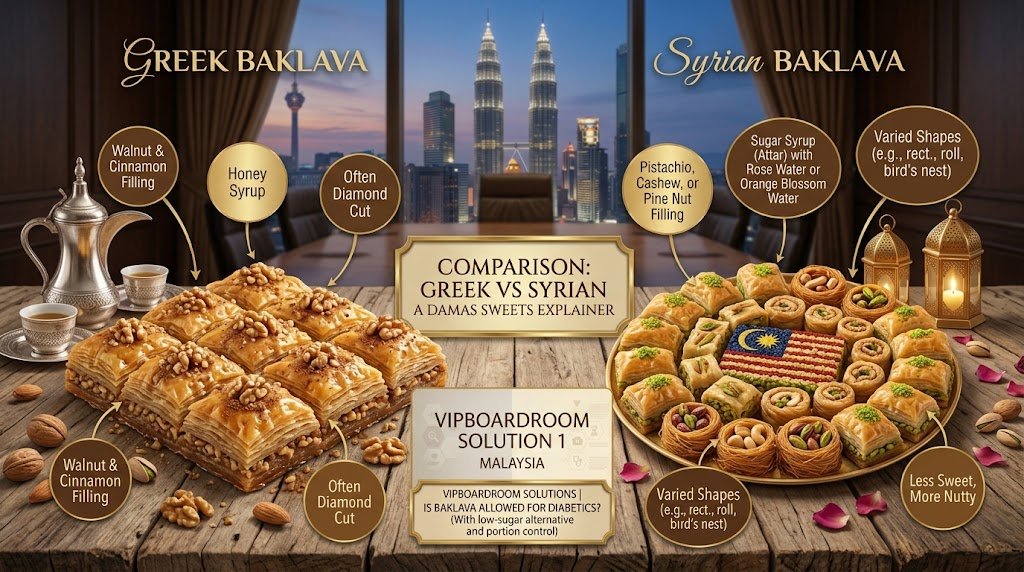
While both delicacies trace their historical lineage to the grand royal ovens of the ancient Mediterranean and the Levant, exploring the difference between greek and syrian baklava reveals two fundamentally distinct gastronomic philosophies. Greek baking leans into heavy, rustic sweetness, aromatic autumnal spices, and bee honey, whereas traditional Syrian craftsmanship is an aristocratic art form centered on micro-thin phyllo sheets, pure animal-clarified ghee, and unadulterated nut flavors.
In Kuala Lumpur’s evolving culinary landscape, recognizing the difference between greek and syrian baklava is essential for event planners, corporate executives, and dessert enthusiasts. Selecting the wrong style can result in a dense, heavy dessert that overpowers your guests rather than an ethereal, shatter-crisp pastry that commands absolute boardroom respect.
Examining the difference between greek and syrian baklava uncovers major distinctions in syrup composition, baking fats, nut selections, and climate durability.
If you are ready to experience the pinnacle of authentic Levantine pastry, explore the handcrafted royal collections at the Damas Sweets Menu today.
1. The Sweetener Battle: Bee Honey vs. Floral Ater Syrup 🍯
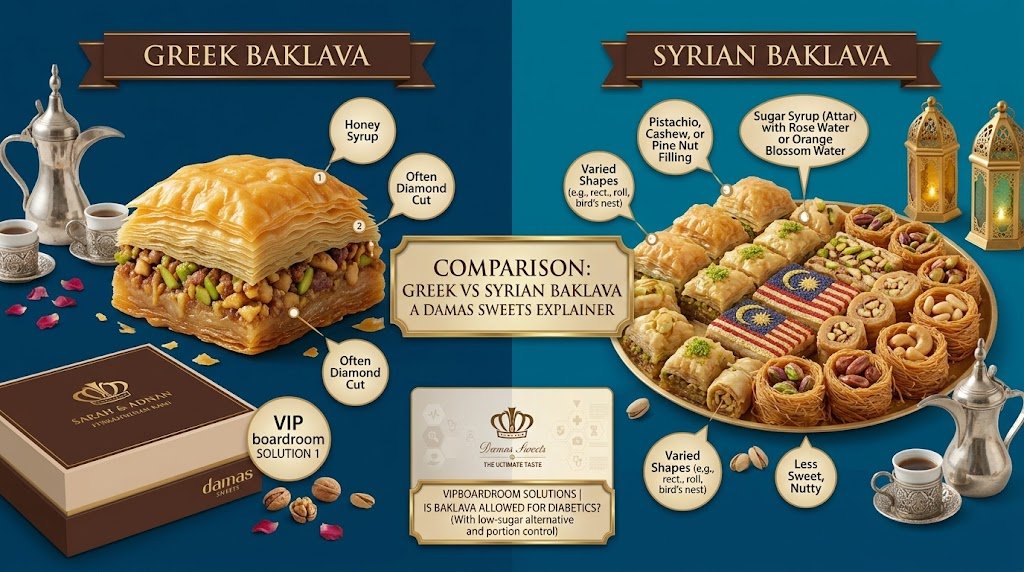
In any serious evaluation of the difference between greek and syrian baklava, the sweetening syrup serves as the primary culinary differentiator.
Traditional Greek baklava relies heavily on raw bee honey boiled with cane sugar, citrus juice, and water. This honey-based glaze imparts a deep amber tint, a thick viscosity, and an intense sweetness. However, honey is naturally hygroscopic, meaning it aggressively draws moisture from ambient air. In Malaysia’s tropical humidity, honey-laden Greek pastry quickly softens, turning limp and chewy within hours.
In sharp contrast, analyzing the syrup difference between greek and syrian baklava highlights the scientific brilliance of Damascus confectionery. Authentic Syrian pastry is glazed with Ater—a light cane sugar syrup boiled with fresh lemon juice and scented with steam-distilled Damascene rosewater and orange blossom essences.
This key distinction ensures that Syrian baklava remains exceptionally light, delicate, and shatter-crisp on the palate without ever coating the throat in heavy, cloying sugar.
2. Baking Fat: Regular Butter vs. Pure Animal Ghee 🧈
Another defining difference between greek and syrian baklava lies in the purity and type of fat used to baste the microscopic dough sheets.
Greek recipes traditionally use standard dairy butter, which contains approximately 16% to 20% water and milk solids. As the pastry bakes, this residual water turns to steam, creating a slightly heavier, softer dough texture while the milk solids brown quickly.
Examining the fat difference between greek and syrian baklava shows why Damascus has been renowned as the imperial capital of pastry for centuries. Syrian master bakers exclusively use Samna Baladi—100% pure animal-clarified ghee derived from grass-fed cows or sheep. By meticulously removing all water and milk solids before baking, pure animal ghee allows more than forty hand-rolled phyllo sheets to fry gently in the oven to an ultra-crisp, golden perfection.
This essential technique guarantees that authentic Syrian pastries release a rich, buttery aroma the second a presentation box is opened, delivering an audible crunch that standard butter simply cannot produce.
Explore the crispness of hand-rolled phyllo by visiting our official Baklava collection.
3. Spice Profiles: Cinnamon & Cloves vs. Natural Nut Fragrance 🌿
The aromatic difference between greek and syrian baklava is immediately apparent before taking the first bite.
Greek pastry is defined by the warm, pungent presence of ground cinnamon and crushed whole cloves layered directly among the nuts. This spice combination imparts an autumnal, spiced profile that often dominates the flavor of the nuts themselves.
When food critics assess the spice difference between greek and syrian baklava, they note that authentic Syrian craftsmanship rejects heavy baking spices entirely. Syrian artisans believe that spices like cinnamon mask the delicate, natural sweetness of premium nuts.
Instead, Syrian baklava relies solely on the natural fragrance of double-roasted Aleppo pistachios and fresh walnuts, elevated only by a whisper of natural floral blossom water. This makes Damascene pastry the preferred choice for sophisticated palates who appreciate clean, refined culinary elegance.
4. Head-to-Head Comparison Table: Greek vs. Syrian Baklava 📊
To clearly visualize how the difference between greek and syrian baklava manifests across every technical parameter, examine this side-by-side comparison:
| Criteria | Traditional Greek Baklava | Authentic Syrian Baklava (Damas Sweets) |
| Primary Baking Fat | Regular dairy butter (contains water/milk solids) | 100% Pure animal-clarified ghee (Samna Baladi) |
| Glaze & Sweetener | Raw bee honey, sugar, and citrus juice | Light cane sugar syrup (Ater) with pure rosewater |
| Dominant Spices | Ground cinnamon and crushed whole cloves | None (pure floral waters and roasted nuts only) |
| Nut Selection | Primarily English walnuts and almonds | Double-roasted Aleppo pistachios, cashews, walnuts |
| Dough Layers | 20 to 30 thicker phyllo sheets | 40+ micro-thin, hand-rolled translucent sheets |
| Texture & Mouthfeel | Dense, sticky, chewy, and moist | Light, airy, shatter-crisp, and delicate |
| Climate Resilience in KL | Softens and becomes soggy rapidly | Retains crispness up to 3 weeks at room temperature |
| Halal Purity Assurance | Often uncertified; may use alcohol carriers | Strictly 100% Halal certified, all-natural ingredients |
5. 7 Syrian Masterpieces That Showcase This Distinction 🛒
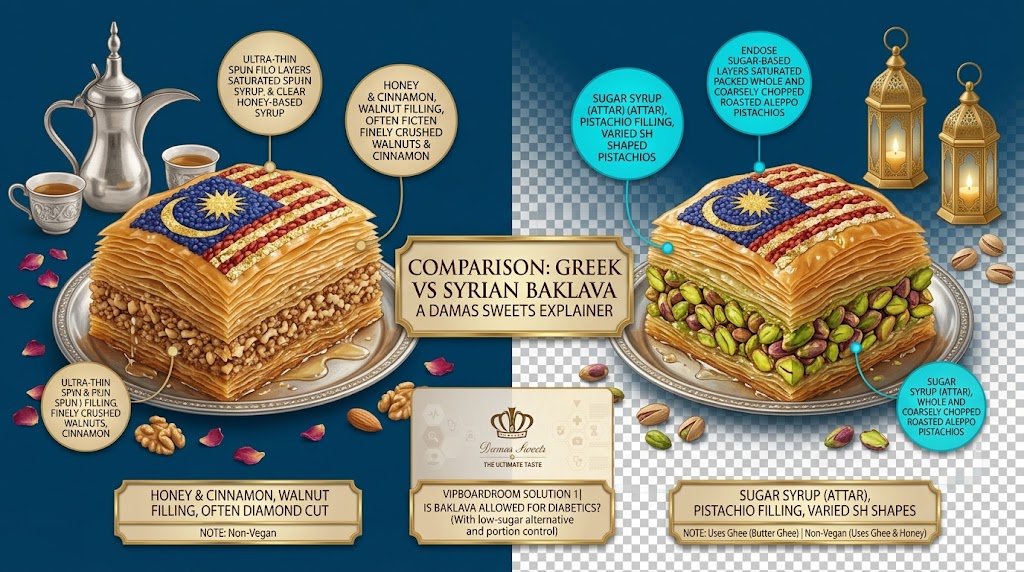
To fully understand the culinary difference between greek and syrian baklava, one must explore the classical geometric shapes perfected by Syrian artisans:
Classic Aleppo Pistachio Diamonds (The Imperial Anchor): Over forty hand-rolled, micro-thin layers of phyllo dough encase a generous core of vibrant Aleppo pistachios, delivering an audible crunch. Explore our foundational baklava selections via the Baklava department.
Cashew Bird’s Nest / Osh El Bulbul (The Architectural Wonder): Spun threads of golden Kataifi dough are crisped in clarified ghee and filled with whole roasted cashews. Discover our assorted collections via the Assorted Premium Baklava gallery.
Grounded Walnut Diamonds (The Earthy Sophistication): For palates seeking a deeper profile, walnut diamonds highlight earthy notes that balance floral syrups without requiring cinnamon.
Pistachio Mabroumeh Cylinders (The Concentrated Crunch): Tightly wound cylinders packed with crushed green pistachios that provide a dense, crumble-free crunch ideal for corporate networking.
Baklava Cream / Warbat (The Velvety Dairy Contrast): Crisp phyllo envelopes encase velvety milk curd (Ashta), offering a delicate cold dairy contrast that has no equivalent in Greek pastry. Review our cream specialties in the Baklava Cream portal.
Live Hot Kataifi Kunafa (The Grand Event Centerpiece): Golden shredded pastry encasing molten authentic Thai Akkawi cheese, providing an interactive cheese pull that complements dry pastries. Coordinate hot banquet pans through our Kunafa Pastry portal.
Artisanal Gelatin-Free Lokum (The Palate Cleanser): Soft, floral jewels slow-cooked from plant starches that cleanse the palate between rich pastry bites. Browse our gift assortments in the Gifts Box portal.
Why Damas Sweets Settles the Difference Between Greek and Syrian Baklava Debate 🏆
When dessert connoisseurs evaluate the difference between greek and syrian baklava, they turn to Damas Sweets as the benchmark of authenticity. The true distinction is not just about geography; it is rooted in an unwavering commitment to ancestral baking standards.
Many commercial dessert shops fail to understand the authentic difference between greek and syrian baklava, selling factory-made pastries loaded with cheap vegetable margarines and artificial corn syrups. These industrial shortcuts compromise the pastry’s integrity. At Damas Sweets, we honor the royal heritage of Damascus by hand-rolling every phyllo sheet and using exclusively 100% pure animal-clarified ghee.
Our corporate and private clients recognize that the difference between greek and syrian baklava clearly favors Syrian craftsmanship for executive hospitality. Syrian baklava never feels greasy or sticky, allowing guests to enjoy fine pastry without messy fingers or cloying sweetness.
Choosing Damas Sweets settles the difference between greek and syrian baklava once and for all. We deliver certified 100% Halal, museum-grade pastries that remain shatter-crisp for weeks across Kuala Lumpur and Selangor.
(Image 3 Requirement: Exactly 3 images total. Raw aesthetic. Brand colors applied: Deep blue and cyan tones exclusively, with golden pastry accents. True alpha-channel transparent background without visible grid lines. NO magenta, NO purple. NO checkerboard backgrounds. English text exclusively. Focus STRICTLY on clean luxury sweet presentation, absolutely NO human figures, NO drinks, and NO external props.)
6. Climate Resilience in Malaysia’s Tropical Weather ☀️
In Malaysia’s humid climate, the difference between greek and syrian baklava becomes a decisive operational factor for event hosts.
Because Greek baklava relies on moisture-attracting honey and water-bearing dairy butter, it rapidly absorbs atmospheric humidity, turning soft and sticky within hours of display.
In contrast, authentic Syrian pastry uses pure clarified ghee and balanced cane sugar syrup, creating a natural moisture-resistant shield. Stored at ambient room temperature in our rigid presentation boxes, Syrian baklava stays pristinely crisp for up to twenty-one days without requiring refrigeration.
Conclusion: Elevate Your Hospitality with Authentic Syrian Pastry 🏆
Appreciating the difference between greek and syrian baklava empowers you to select the ultimate confection for your family, guests, and corporate stakeholders.
While Greek baklava offers a rustic, spiced charm, authentic Syrian baklava provides an aristocratic, light, and shatter-crisp dining experience that represents the highest pinnacle of Mediterranean gastronomy.
Our master Syrian artisans in Kuala Lumpur are ready to handcraft your bespoke orders with uncompromising precision. Experience the authentic distinction with Damas Sweets today.
Order Your Freshly Baked Artisan Selection Today 🛒
Are you ready to taste authentic, royal Damascene pastry crafted with 100% pure animal ghee and premium Aleppo pistachios?
Damas Sweets prepares limited daily artisanal batches to ensure peak freshness, absolute purity, and complete ingredient transparency.
Browse our complete luxury menu and place your order online through the Damas Sweets Menu portal.
To select our signature presentation boxes for your next family gathering or corporate event, visit the Baklava department and confirm your order today! ✨
Frequently Asked Questions (FAQ) 💬
What is the single biggest difference between greek and syrian baklava?
The primary difference between greek and syrian baklava is the syrup and spice profile. Greek baklava uses a heavy glaze made with raw bee honey, cinnamon, and cloves, giving it a dense, spiced flavor. Syrian baklava uses a lighter cane sugar syrup (Ater) infused with natural rosewater and orange blossom water, containing zero cinnamon to let the natural flavor of roasted pistachios shine.
Which pastry stays crisp longer in Malaysia: Greek or Syrian baklava?
Syrian baklava stays crisp significantly longer. Greek baklava uses honey, which absorbs moisture quickly in tropical humidity, causing the dough to soften. Syrian baklava is baked with water-free clarified animal ghee and glazed with cane sugar syrup, allowing it to maintain its shatter-crisp texture for up to three weeks at room temperature.
Does Syrian baklava contain any honey?
No. Authentic Syrian baklava contains zero bee honey. It is sweetened exclusively with boiled cane sugar syrup infused with lemon juice and steam-distilled floral blossom essences, keeping it lighter and less cloying than honey-based pastries.
Why does Syrian baklava have more layers than Greek baklava?
Syrian master artisans specialize in rolling paper-thin, translucent sheets of phyllo dough, typically stacking more than forty microscopic layers per pastry. Greek baklava traditionally uses twenty to thirty thicker sheets, resulting in a heartier, more rustic chew.